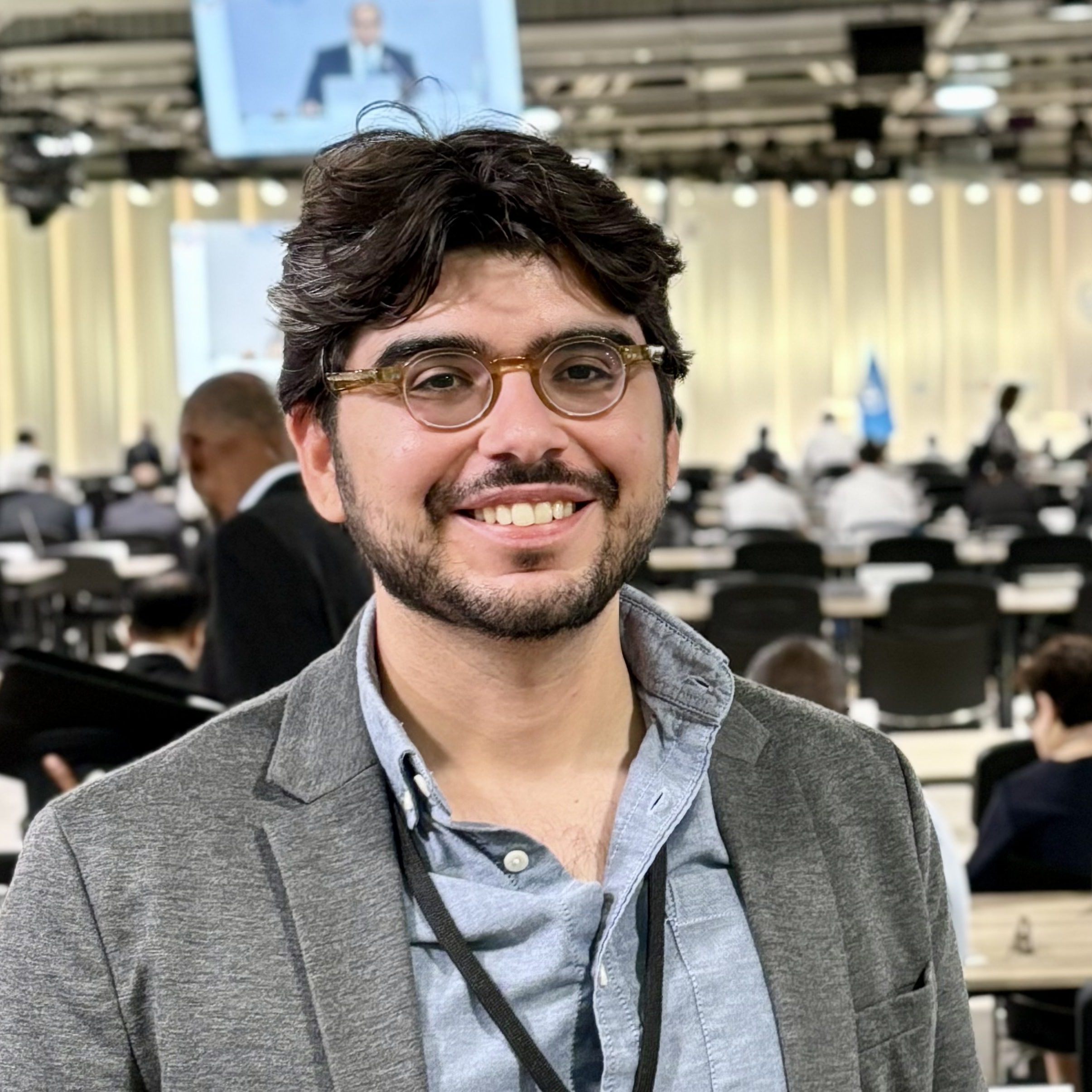
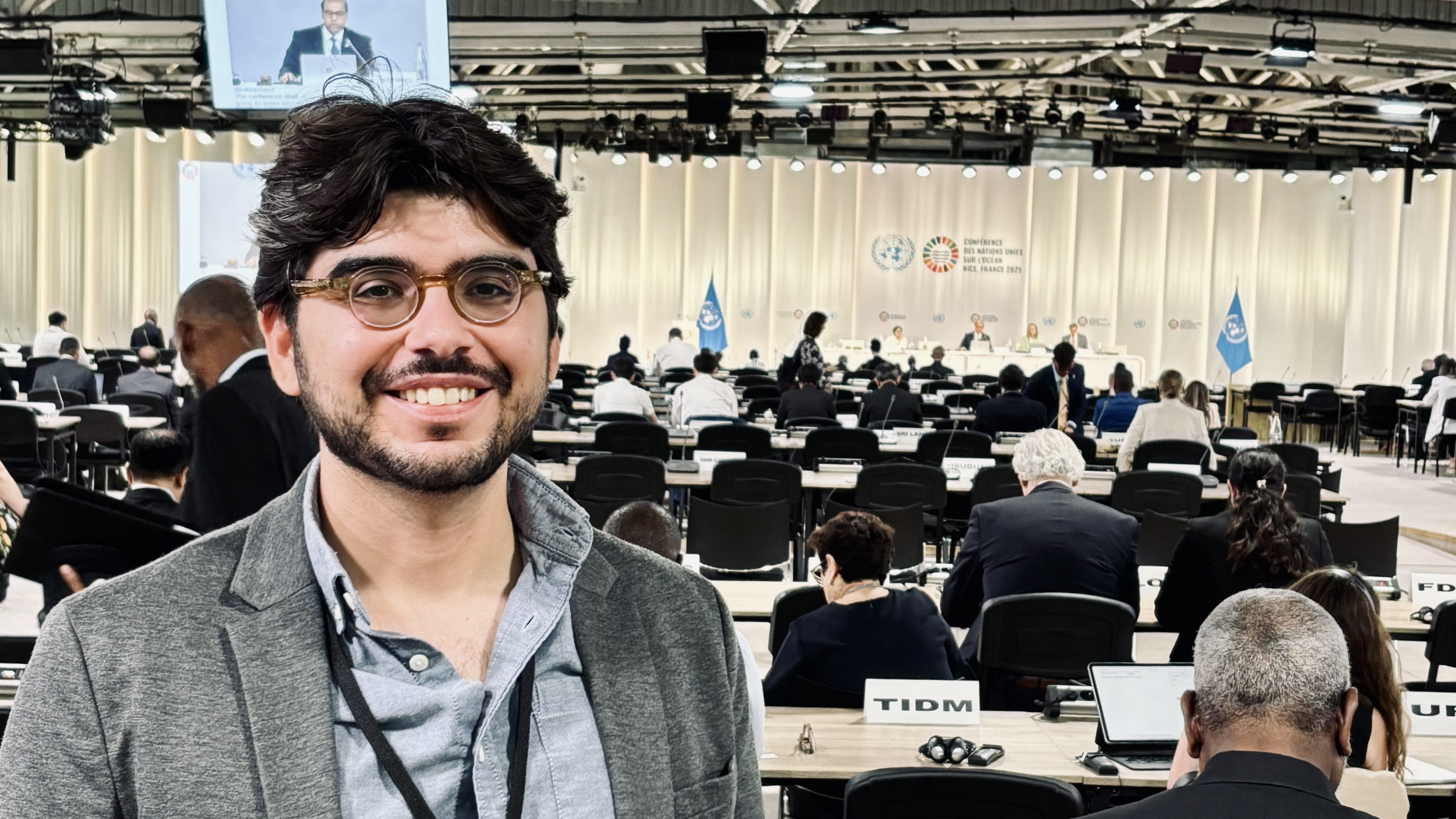
Dr Henrique JB Marcos
I am a legal scholar working at the intersection of law, technology, and the environment. My research asks what happens to legal rules written for a physical world when the thing they govern moves into a database.
Marine genetic resources are the case that holds my attention. The law of the sea was built around ships, samples, and jars, and it assumed that anyone who wanted to use marine life had first to go and collect it. Genetic sequence data breaks that assumption. Once an organism has been read off and stored as a digital line of code, it can be copied, sent across the world, and built upon by someone who never went to sea. The 2023 Agreement on marine biodiversity beyond national jurisdiction (the BBNJ Agreement) sets out rules on access and benefit-sharing for those resources, and artificial intelligence is now moving bioprospecting further still, from collection towards prediction.
In 2026 I received an NWO Veni grant for ‘Analogue Rules in a Digital Ocean’, a three-year project on how law should be interpreted when the discovery of marine genetic resources is AI-enabled. I am a member of the BBNJ Informal Expert Group convened by the European Commission (DG MARE) ahead of the first Conference of the Parties, a Research Fellow with the Earth System Governance Project, and a member of the Deep Ocean Stewardship Initiative. In 2025 I served as a UN scientific delegate at the third United Nations Ocean Conference in Nice, and I have contributed to the UN-GEF BBNJ Implementation Project in Brasília.
I trained as a legal theorist. My doctoral work (Maastricht University and the University of São Paulo, 2019–2023) addressed consistency and fragmentation in international law, and comes out as Ordering the Fragments: International Law under the Planetary Crisis (Springer, 2026). That background shapes how I approach technology governance: I try to bring conceptual precision, and attention to the structure of legal reasoning, to a field that sometimes lacks both. My second book, Algorithmic Bioprospecting, is under contract with Edward Elgar.
I also build things. With Rohan Nanda I lead the Legal Rule Tagger, a platform where students unpack the elements of legal rules and visualise legal positions, funded by an EDLAB Education Innovation Grant, and BlueLab, an AI due diligence lab for the blue economy funded by a Comenius Teaching Fellowship. I built Sea Level Rise, a browser game for the Global Law classroom.
I teach at Maastricht University’s Faculty of Law, at both LLB and LLM level. I supervise ‘Coding Nature: Law and Ethics in the Age of Algorithmic Bioprospecting’, a Legal Challenge Project in which students investigate how international environmental law should respond to AI-driven bioprospecting. I also teach Global Law, Introduction to Law, Thinking Like a Lawyer, and Legal Philosophy, and I hold the Dutch University Teaching Qualification (BKO).
At Hasselt University I teach ‘Logical and Computational Reasoning for Lawyers’, a six-week course that takes first-year law students from set theory and propositional logic through to rule-based engines and argumentation frameworks. I welcome enquiries from prospective doctoral researchers working on ocean governance, international environmental law, or law and artificial intelligence.
Scroll down for news and updates. I am active on LinkedIn. You can reach me at h.jbmarcos {@} maastrichtuniversity.nl

