One lawyer and two computer scientists walk into a biomedicine and bioinformatics conference…
It sounds like the opening of a joke, but last Friday (17-04-2026) it was byteMAL 2026 at RWTH Aachen. I was there with Rohan Nanda (Maastricht Law & Tech Lab) to present a neurosymbolic framework for clinical reasoning with biomedical evidence (co-authored with Fivos Tzavellos, Universiteit van Amsterdam).
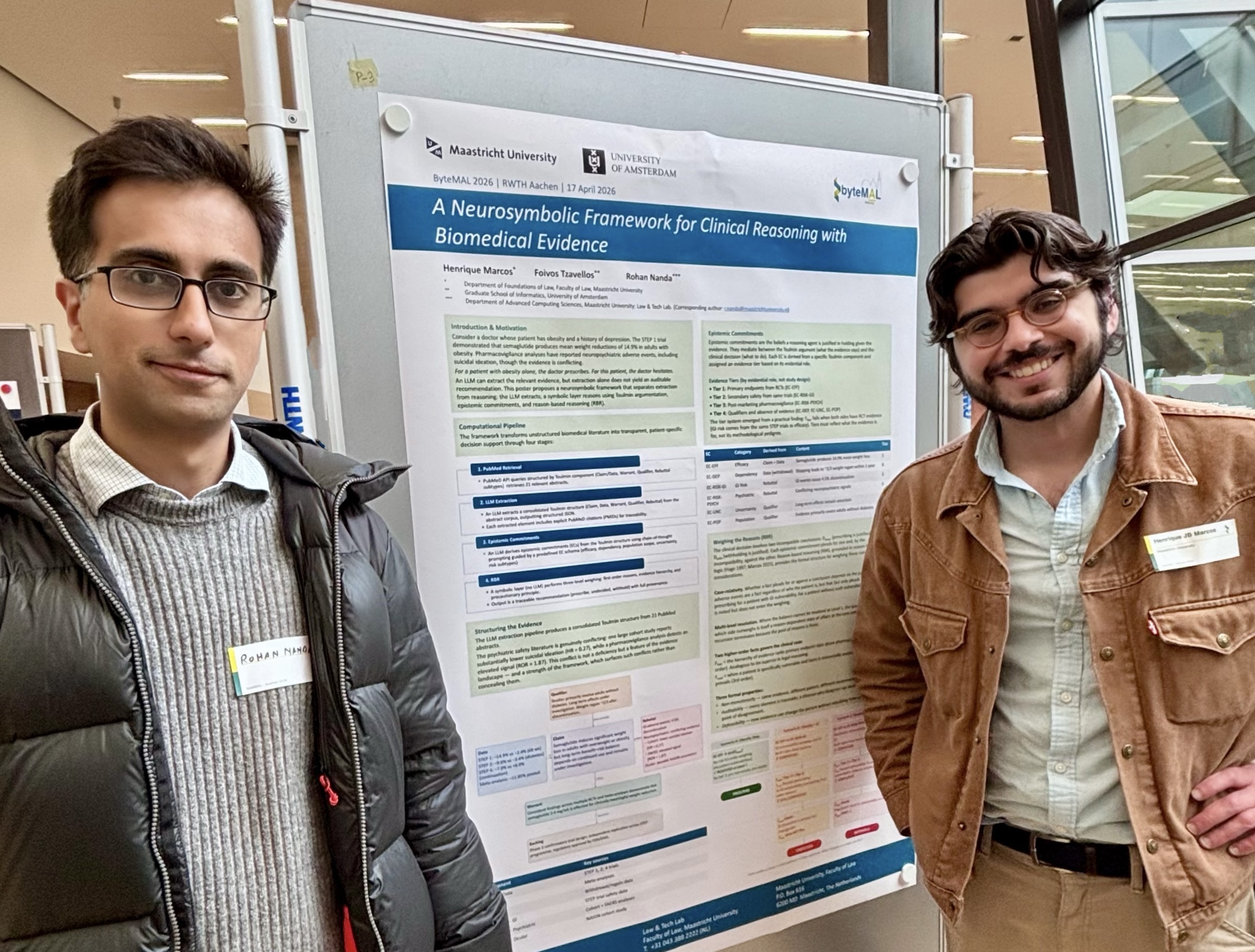
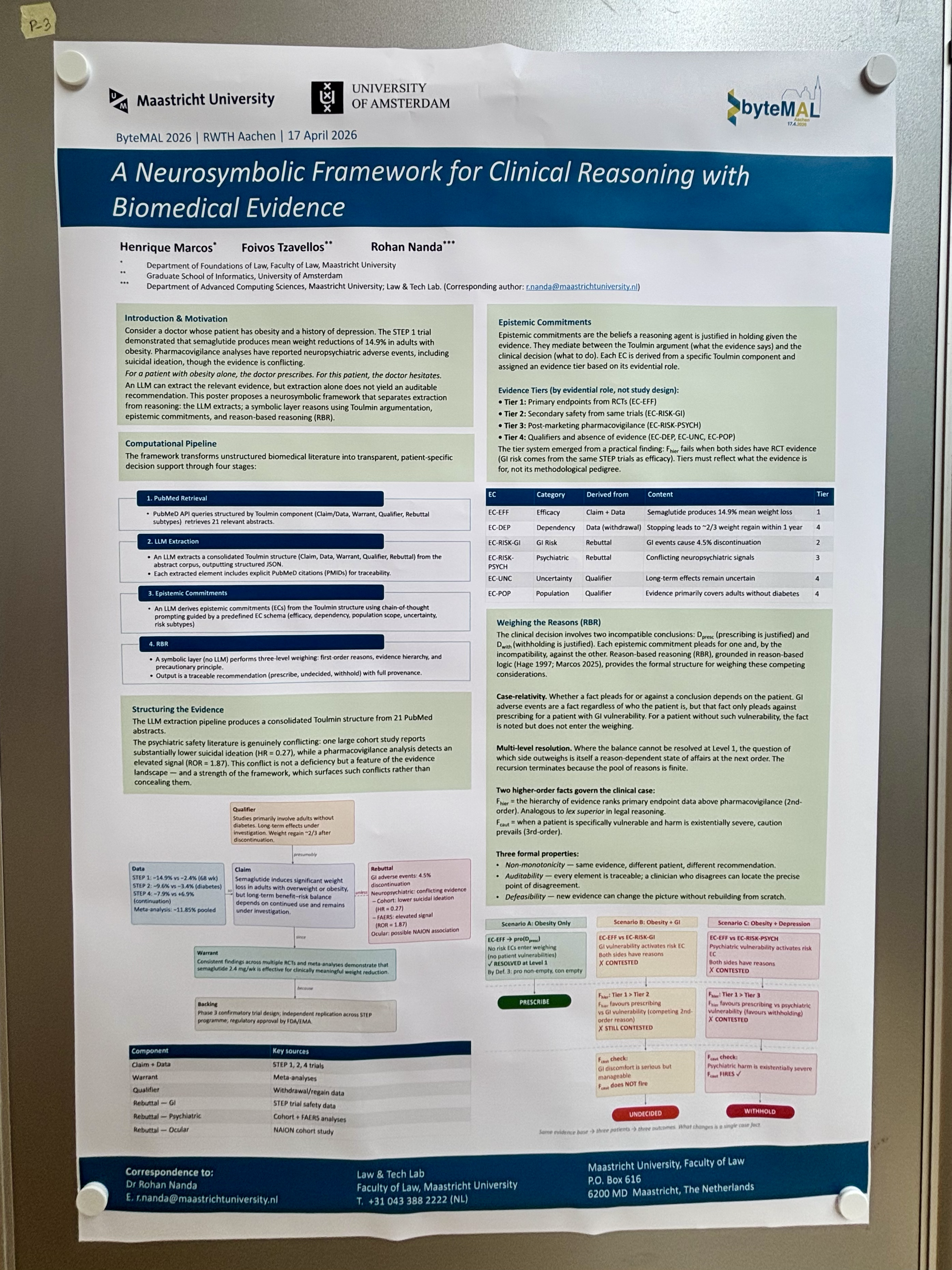
The idea: use a Large Language Model to extract the structure of the evidence landscape (Toulmin arguments drawn from PubMed abstracts), then hand the weighing over to a symbolic layer that reasons transparently about competing considerations. In our worked example on semaglutide, the same evidence base yields three different recommendations for three different patients, depending on a single case fact.
Wait, but what’s legal about this? 🤔
Because the structure of the problem is not only clinical. The same question runs through international environmental law on genetic resources and through health law more broadly: how to weigh conflicting evidence under uncertainty when sources are of uneven authority and the relevant facts vary by case. Regulators, clinicians, and treaty bodies face a common formal challenge of defeasible reasoning.
The clinical case is where we started. Marine genetic resources and health law are next. ⚖️ 💊 🧬
Grateful to the ByteMAL organisers at RWTH Aachen for the warm welcome and the wide lens.

