Earlier this week, Rohan Nanda, Julia Schutz Veiga and I presented our joint work ‘Mapping the Unseen: Strengthening Citizen Oversight of Marine Genetic Resources through Artificial Intelligence’ at the NWO (Nederlandse Organisatie voor Wetenschappelijk Onderzoek) Future-Proof Regulation Symposium and Practitioner Day (17–18 November 2025).
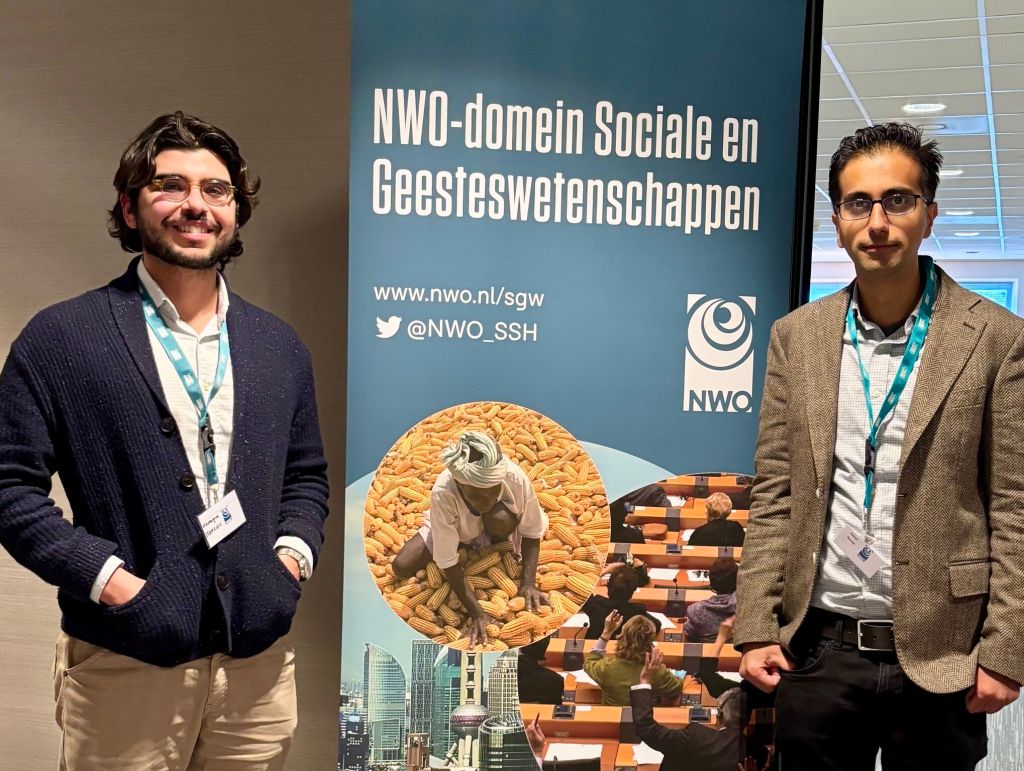
The meeting focused on a central question for regulators across Europe: how can regulatory systems remain effective, legitimate and adaptable in a world marked by accelerating technological change, cross-border cooperation, and shifting public expectations?
Our contribution addressed how AI-driven tools can help make complex legal regimes, particularly those governing marine genetic resources and digital sequence information, more accessible, transparent, and traceable for citizens and institutions. We discussed how a structured, treaty-grounded normative knowledge base can support future-proof regulation by: clarifying legal responsibilities across fragmented regimes; strengthening citizen and stakeholder oversight; supporting regulators operating within multi-actor networks; and improving transparency and auditability in AI-assisted decision-making.
It was a pleasure to represent Maastricht University Faculty of Law, the Maastricht Law & Tech Lab, Foundations Maastricht, and our wider research community at this event. I am grateful to NWO for convening such an engaging conversation on the future of regulation in Europe, and to all participants who contributed to the thoughtful exchanges over both days. Special thanks to Josje Kok who chaired our panel.
We look forward to developing the next stage of this work and continuing the dialogue on how the EU can strengthen legal clarity, accountability, and public value in the digital age.
 Henrique Marcos